

October 14th
2026
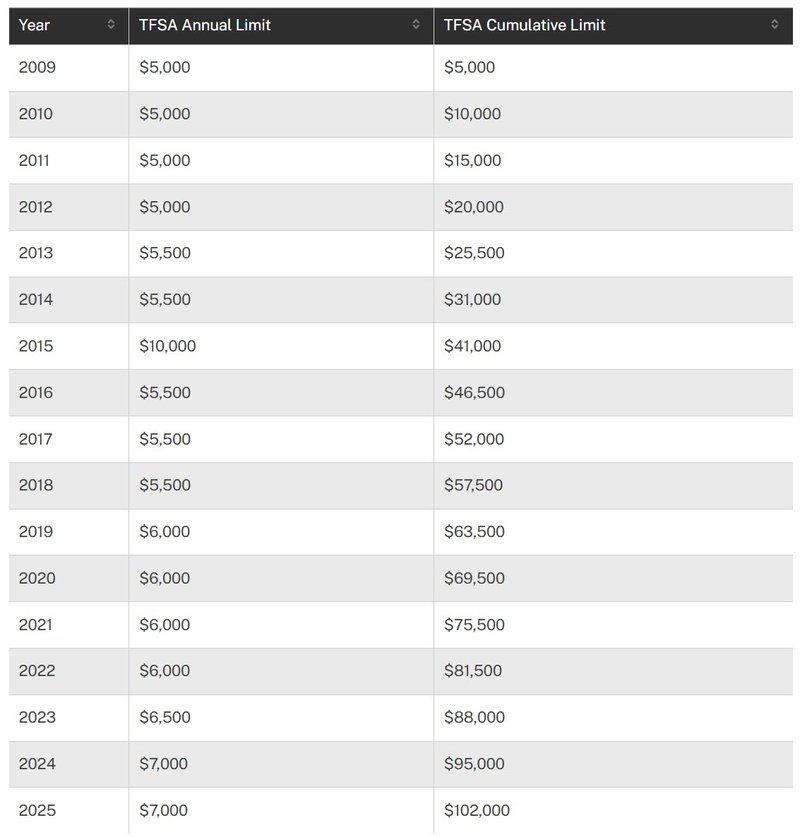
 The actual TFSA yearly limit was set at $5,000 back in 2009 when the investment account was first created, but it’s indexed to inflation each year and rounded to the nearest $500 to simplify things for investors. The exception was 2015, when the TFSA limit was hiked up to $10,000 for a single year before being decreased to $5,500.
Someone who has never contributed to a TFSA and was born in 1991 or earlier could have cumulative contribution room of $95,000 as of Jan. 1, 2024.
TFSA contribution limit—2009 to 2025
 Investing ideas for your TFSA
TFSAs are not just for savings. You can also invest with your TFSA.
Stock picking
Herman VanGenderen has more than $100,000 in his TFSA. He grew his money by focusing on Canadian and foreign stocks, diversification and dividends. Or if you are lucky enough to buy during depressed markets like this investor (he has nearly 40% of his investments in BP stock), the subsequent gains can be significant—and tax-free.
Simple, ETF portfolio
Patti has more than $57,000 spread out across 19 holdings. Experts give her a simple, two-ETF solution to make sure she’s well diversified and making bank in the long term. Here’s another example of someone who’s just starting out with TFSAs, looking for a simple, no-fuss approach to start building wealth in the account. Or, if you’re more comfortable with risk, you could go the route of this 31-year-old Toronto police officer, who focuses on aggressive, equity index funds.
Out of the box (and not recommended)
There are some strategies that work for investors—but you shouldn’t necessarily try to recreate. For instance, one man suggests buying stocks and holding on to them forever and ever, while experts worry that he’s not diversifying enough. And another investor transfers Canadian dividend stocks “in-kind” to and from his unregistered account annually, a strategy that seems to work but doesn’t hold up upon closer inspection.
This MoneySense article was legally licensed by AdvisorStream.

 250-953-2307